
Stop Paying Enterprise Prices for Retail Testing
Retail testing, practised by both FMCG Brands and retailers to try and establish the best merchandising concepts to roll out across hundreds if not thousands of stores … has a cost problem.
Not because shopper-insights are becoming less important - quite the opposite: In today’s turbulent, cost-constrained competitive market with greater scrutiny of commercial decisions, understanding how shoppers respond to merchandising, pricing, assortment and promotional changes has arguably never been more important.
No.
The problem is that many organisations are still using workflows designed for calmer times and a bygone era.
Remember when budgets were larger? When timelines were longer? When everyone accepted that six-figure testing programmes and fragmented software stacks were simply the cost of doing business?
Well, nostalgia isn’t as good as it used to be.
Today, those assumptions are increasingly being challenged by market pressures which have effectively compressed budgets, crunched timelines and given us all that creeping feeling of someone looking over our shoulder and breathing down our necks as we try to do our jobs.
And – radical thought here - perhaps it's about time!
Are You Paying Too Much To Answer Everyday Questions?
Let's take a step back. Many retail decisions are surprisingly ordinary: Should Product A sit above Product B? Would six facings outperform four? Should a promotional display be positioned at the aisle entrance or mid-aisle? Should a new SKU be listed? Should a slow-moving product be removed? And so on.
These decisions matter.
Collectively, they can influence $Millions in revenue, and with margins getting ever tighter, “oops” moments could be the difference between surviving this market, and not.
But despite being everyday merchandising questions, organisations often find themselves navigating a maze of software platforms, specialist vendors, project managers and disconnected workflows before a single shopper ever gets the chance to check it out and TELL you it sucks before finding out the hard way.
The result?
Questions that should be straightforward become expensive.
Very expensive. Runway-burning kind of expensive. Bygone-era-expense-account kind of expensive.
The Retail Industry Has Normalised Friction
Software such as Blue Yonder (formerly JDA), RELEX, DotActiv, Leafio and Nielsen Spaceman for category management, assortment planning and planogram creation, together with solutions such as InContext Solutions or Concept Sauce for virtual store testing, are excellent for their intended purpose.
However, each brings its own layers of complexity and friction to the overall process, raising cost and limiting throughput by virtue of its specialisation - not to mention the added challenge of ensuring the entire stack runs smoothly: from planogram creation and virtual store testing, to point-of-sale merchandising, survey integration and finally data analytics.
That's a lot of moving parts, and a huge amount of coordination effort.
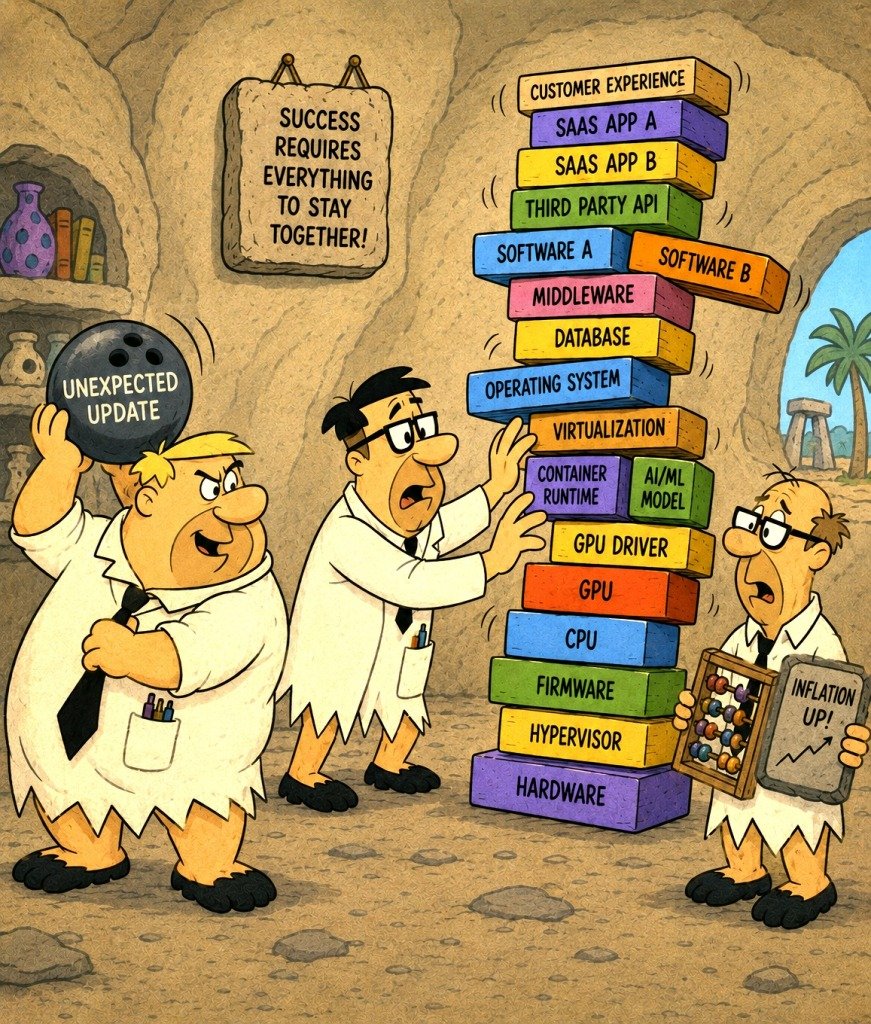
One of the strangest things about mature industries is that inefficiency often becomes invisible. Workarounds appear. Processes that would seem absurd to an outsider gradually become accepted because "that's how things are done", and the thought of removing any of those little Jenga blocks that ingenuity over time has built into a system that now depends on them is accompanied by a wave of fear of the whole thing crashing down.
And so it continues. On and on, until the shiny new thing (whatever it was) becomes an old, creaking monolith that does the job but at a considerably inflated cost.
Which is fine and dandy when the pressure’s off, but how long ago was that??
At some point, reality approaches with a thud, and companies need to ask an uncomfortable question: Are we paying for insight, or are we paying for the machinery surrounding it?
The 80% Solution Everyone’s Starting To Think About
Every industry eventually reaches a tipping point, where existing costs and processes are weighed against the disruption of change; a moment when buyers stop chasing maximum capability and start questioning not only the visible financial costs of the system, but also the hidden cost of reduced throughput limiting what can effectively be explored by the team.
So the question is simple : If an alternate solution delivers 80% of the practical value at 20% of the cost and supports additional exploration of new concepts by producing outputs in a fraction of the time, is the remaining 20% of capability really worth the delays and the overhead?
Only you know if the answer has to be “yes”, in which case I really don’t envy the ongoing battles with your finance teams and the finger-crossing when you roll out to stores. But if you CAN get what you need from an 80% solution, the old shaky Jenga tower stacked up in the corner is starting to look less appealing.
Yet many organisations continue to operate as though every retail testing exercise requires the same level of complexity, infrastructure and expense, whereas in reality, most teams are not trying to solve the hardest problem imaginable.
They're just trying to make better commercial decisions, reduce risk, understand shopper behaviour and – most importantly - avoid expensive mistakes.
So the question is not whether sophisticated enterprise workflows have value, it’s whether every project truly needs them.
Do you really need to pay Enterprise prices?
If the same problems can be solved with fewer vendors, fewer handoffs, less complexity and at a fraction of the cost, then some serious questions need to be asked about why hanging on to the old systems is the best move.
Often, the answer is because shelf and merchandise testing is complicated, difficult, slow and – therefore – expensive. If only there was a better, faster, cheaper way to do it.
There is.
Buzz 3D
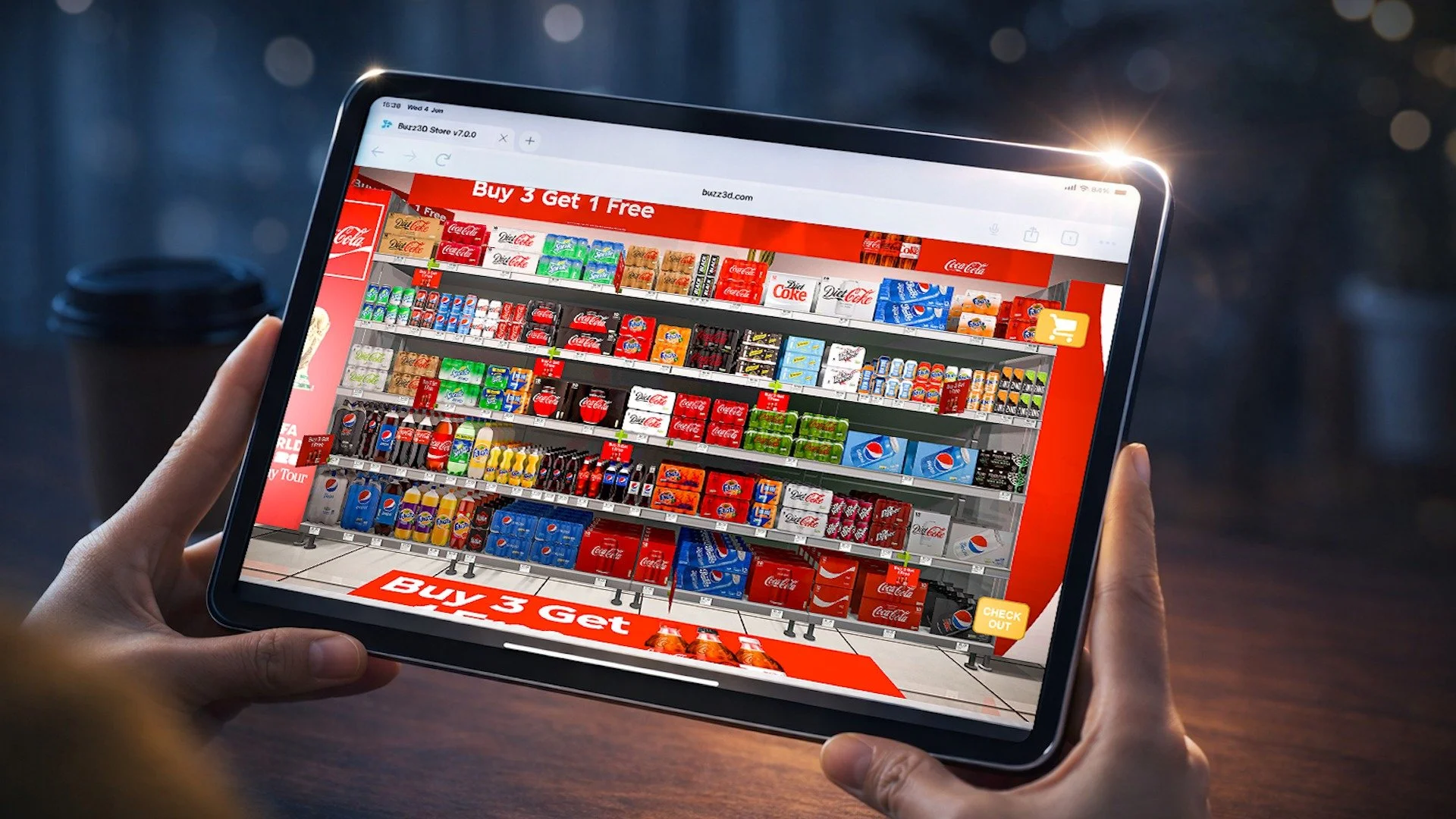
At Buzz 3D, these are exactly the questions that led us to combine these workflows into a single browser-based platform that allows teams to create realistic interactive retail experiences directly from planogram data, deploy them to shoppers in minutes and capture behavioural insights without the complexity traditionally associated with retail testing.
A modern, all-in-one platform to replace expensive multi-vendor retail testing with a single high-speed solution that delivers the insight you need without the overhead you don't.
Because when the cost of testing falls, organisations gain the freedom to validate more ideas, challenge more assumptions and make better decisions without watching budgets get sucked into a black hole in the process.
In uncertain markets, the competitive advantage of such a system isn’t just a convenience.
It’s a necessity.
The Friction in Category Management Laid Bare
Here's how the leading category management platforms compare within their areas of expertise, and where expensive and time-consuming handoff friction negatively affects the wider workflow.
| Solution | Planogram Creation |
Handoff Friction? |
Shopper Testing |
Handoff Friction? |
Behavioural Data Capture |
Frictionless Working |
|---|---|---|---|---|---|---|
| Blue Yonder / JDA | ✅ | Yes | ❌ | Yes | ❌ | ❌ |
| RELEX | ✅ | Yes | ❌ | Yes | ❌ | ❌ |
| DotActiv | ✅ | Yes | ❌ | Yes | ❌ | ❌ |
| Leafio | ✅ | Yes | ❌ | Yes | ❌ | ❌ |
| Nielsen Spaceman | ✅ | Yes | ❌ | Yes | ❌ | ❌ |
| InContext Solutions | ❌ | Yes | ✅ | Yes | ❌ | ❌ |
| Concept Sauce | ❌ | Yes | ✅ | Yes | ❌ | ❌ |
| Survey Platform | ❌ | Yes | ❌ | Yes | Partial | ❌ |
| Analytics Platform | ❌ | Yes | ❌ | Yes | ✅ | ❌ |
| Buzz 3D | ✅ | No | ✅ | No | ✅ | ✅ |
Traditional retail testing workflows often rely on multiple specialised platforms working together. While each solution may excel within its own area of expertise, moving information between systems can introduce project coordination overhead, workflow delays and handoff friction. Buzz 3D combines these capabilities into a single platform designed to reduce complexity, reduce cost, accelerate throughput and enable frictionless working.
FAQs
-
That’s up to you.
Many organisations continue to use category management and planogram software as their system of record, but choose to accelerate early-stage concept development and testing before committing time, effort and resources to more complex workflows.
This is where Buzz 3D can flex to work alongside existing systems, importing planogram data and transforming it into realistic interactive shopper testing experiences in minutes.
However, organisations looking to simplify their retail testing workflow may find that Buzz 3D provides sufficient insight to answer the questions they are asking of each concept, reducing their dependence on multiple specialist platforms.
By bringing planogram creation, shopper testing and behavioural data capture together within a single workflow, Buzz 3D also removes many of the delays, handoffs and coordination challenges that traditionally occur between these silos, helping teams move from idea to insight faster and at lower cost.
-
That’s entirely up to you.
Buzz 3D is designed to rapidly assemble interactive 3D shelf and store environments, allowing concepts to be visualised, tested and refined in minutes. This enables teams to explore a far greater number of merchandising, assortment, pricing and promotional ideas without the delays and coordination effort often associated with managing multiple specialist vendors.
At the same time, we fully recognise that many organisations have long-established virtual store simulation workflows that continue to provide value in final validation of chosen concepts.
Consequently, Buzz 3D can operate alongside these services, providing a rapid concept development and screening layer before more complex simulations are commissioned.
In many cases, this allows weaker concepts to be filtered out earlier, ensuring that time and budget are focused only on the most promising opportunities.
However, Buzz 3D is designed to provide sufficient shopper insight to support final concept validation, and at its lower price point de-risks experimentation with more ambitious concepts outside the norm.
We always recommend that customers start small, evaluate the results for themselves, and then expand their usage if the platform meets their expectations.
Reducing reliance on multiple specialist platforms removes the delays, handoffs and workflow friction that traditionally occur between planning, testing and analytics teams.
-
Retail testing frequently involves multiple specialised platforms covering planogram creation, virtual store testing, survey deployment and analytics.
While each solution provides value individually, the coordination required between systems, vendors and teams can increase cost, complexity and project timelines.
This not only affects cost, but is also a throttle to innovation, as it reduces the number of concepts that can be safely tested within tightened timelines and limited budgets.
-
For suppliers, the 3-Silo Problem describes the separation between planogram creation, shopper testing and behavioural data capture.
For retailers, who often coordinate with suppliers to implement in-store concepts, the 3-Silo Problem exists between central planning, operational communication and store execution.
In both cases, the challenge occurs when one silo attempts to connect with another.
When these activities are performed using separate systems, teams and workflows, additional handoffs, delays and costs are introduced.
The result is increased complexity, slower decision-making and reduced capacity to explore and test new ideas.
Buzz 3D was designed to bridge these silos within a single, modernised workflow, reducing friction and helping organisations move from idea to insight faster.
-
Yes. By combining planogram visualisation, shopper testing and behavioural analytics into a single platform, Buzz 3D reduces the need for multiple specialist systems and the operational overhead associated with managing them.
Buzz 3D also generates realistic interactive retail experiences that can be easily shared with stakeholders, helping teams communicate, review and refine concepts without relying on multiple vendors or disconnected workflows.
By reducing the delays, handoffs and coordination effort that traditionally occur between planning, testing and analytics teams, as well as retail-side planning, operational communication and execution on the shop floor, organisations can move from idea to insight faster and at lower cost.
-
Buzz 3D can transform planogram data into realistic interactive retail experiences in minutes, while allowing non-specialists to adjust concepts and iterate improvements with ease.
This allows organisations to deploy studies significantly faster than traditional multi-platform workflows.
-
Yes. Buzz 3D integrates with survey workflows and can capture detailed behavioural data alongside traditional survey responses, enabling richer shopper insights.
Our browser-compatible REST API allows the real-time retrieval of respondent actions, enabling surveys to branch dynamically based on any relevant criteria.
Buzz 3D is compatible with any browser-based online survey platform.
-
Buzz 3D is aimed at FMCG suppliers, retailers, shopper insight teams, category managers, market research agencies and merchandising teams seeking a faster, lower-cost and more streamlined approach to retail testing.
Buzz 3D has been recognised across multiple platforms for innovation in 3D planogram testing and survey integration.
View our listings on SourceForge, Slashdot, and more.