
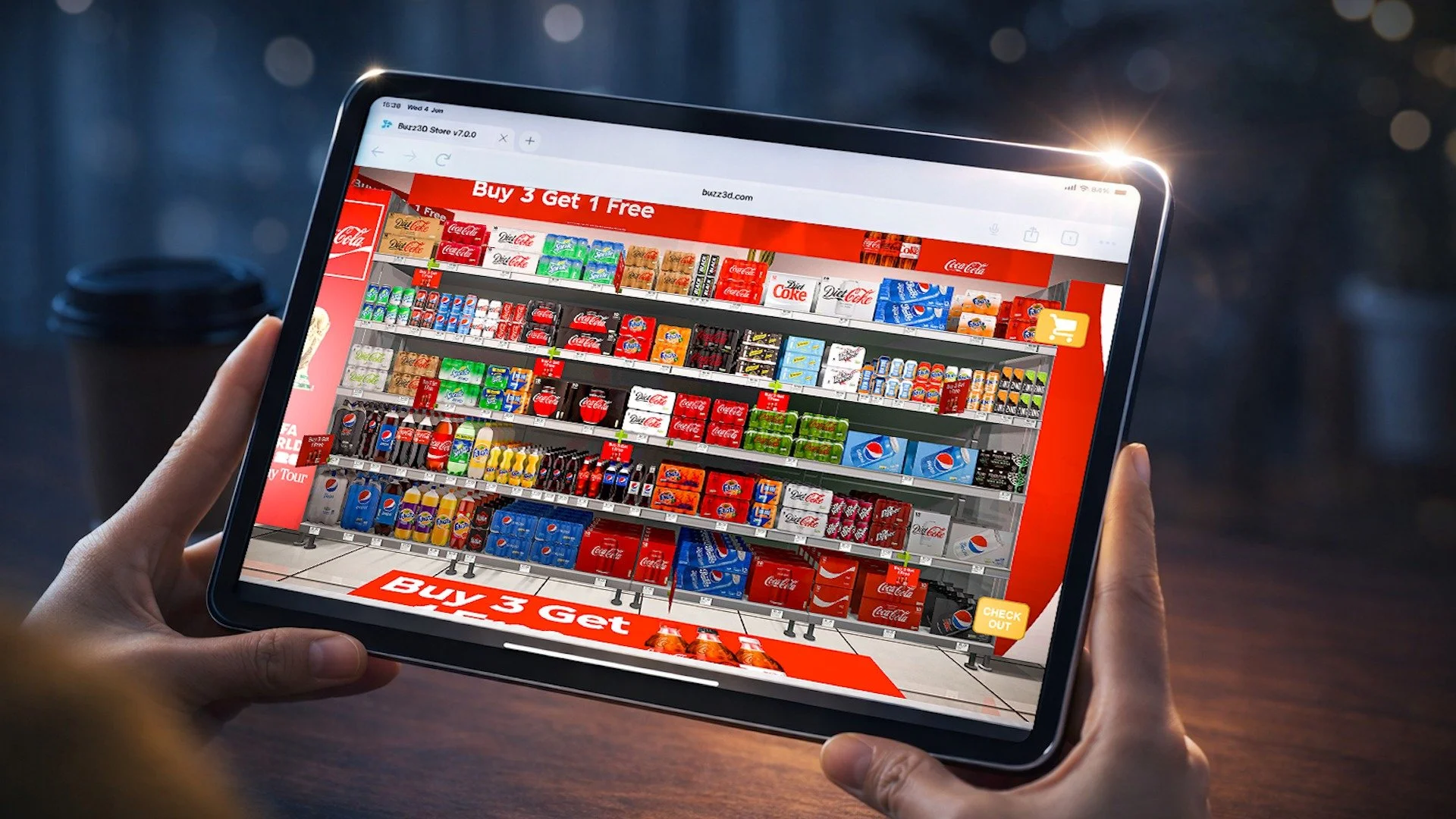
The Buzz 3D Innovation-Testing Ecosystem
Connecting …
Planogram Creation
Interactive Shelf Testing
and
Shopper Insights
… through one unified workflow
The Innovation Testing Ecosystem
The Innovation Testing ecosystem brings together planogram creation, interactive shelf testing and shopper insights into a single connected workflow. Traditionally these disciplines operate independently, creating delays, specialist hand-offs and additional effort that naturally limit the number of concepts organisations can evaluate before rollout.
The 3 Silos of Retail Innovation
Silo 1:
Planogram Creation
Traditional Workflow
Expert team members use Enterprise planogram platforms such as Blue Yonder (JDA) or NIQ Spaceman to build shelf displays.
Handoff to Shelf-Testing:
Planograms must be converted into realistic, testable shopper experiences through additional specialist work.
|
Buzz 3D Workflow
Quickly import or assemble interactive planograms from scratch into interactive, shopper-ready shelves - intuitive to use, no training required.
Buzz 3D handoff to Shelf-Testing:
URL - automatically generated. Includes findability and shopping.
Silo 2:
Interactive Shelf Testing
Traditional Workflow
Survey specialists incorporate planograms prepared in Silo 1 & build shopper studies, questionnaires, recruit respondents and deploy online.
Handoff to Shopper Insights:
Collected data is cleaned, curated, compiled and made available to insights teams for deep analytics.
|
Buzz 3D Workflow
Survey specialists incorporate shelf URL into simpler surveys designed for general commercial assessment, not deep-dive analytics.
Buzz 3D handoff to Shopper insights:
API or Data-Download.
Live executive summary available.
Silo 3:
Shopper Insights
Traditional Workflow
Research analysts interpret behavioural data to identify the strongest merchandising, pricing and assortment concepts before rollout.
This is a time-intensive, complex process often involving several specialists and psychologists to obtain appropriate insights.
|
Buzz 3D Workflow
Automatic executive summary information is generated live. Data can be downloaded for high-level analysis, determining if the concept warrants conventional deeper testing.
Buzz 3D handoff to traditional workflow where necessary:
Data outputs & API available.
Enterprise Integration: Built to Complement Your Stack
Buzz 3D operates strictly as an upstream rapid pre-screening layer to expand your overall innovation throughput. It is engineered to optimise, not replace, your existing investments in downstream enterprise validation systems and custom market research panels.
Upstream Pre-Screening: Buzz 3D Innovation Testing Platform.
Downstream Validation & Analytics (optional): Blue Yonder | NIQ Spaceman | dunnhumby | InContext Solutions | Ipsos Simstore
FAQs
-
Innovation Testing platforms enable category teams to rapidly create, refine and pre-screen merchandising, pricing, assortment and promotional concepts before committing resources to deeper shopper validation.
-
No. Buzz 3D operates upstream of traditional shopper research, enabling organisations to identify the strongest concepts before progressing to deeper enterprise validation.
-
Yes. Buzz 3D generates interactive shelf experiences that can be embedded into existing survey platforms and research workflows, allowing organisations to continue using their preferred research tools and panel providers.
-
Yes. Buzz 3D can build interactive shelves from existing planogram and product data, dramatically reducing the time needed to prepare concepts for shopper evaluation.
-
The most effective retail 3D visualisation platforms do more than create attractive shelf images. Look for key capabilities such as rapid planogram automation, interactive product selection, seamless survey integration, and the ability to capture authentic shopper behavioural data.
Platforms like Buzz 3D reduce the time required to create and test concepts, allowing category management, shopper insight, and innovation teams to evaluate significantly more ideas before committing resources to deeper enterprise validation.
-
Traditional 2D planograms are excellent operational planning tools, but they cannot demonstrate how shoppers naturally interact with products on a physical shelf.
Interactive 3D planograms allow respondents to browse shelves, inspect products, and make realistic selections within a virtual shopping environment or research study. This produces real-time behavioral data alongside traditional survey responses, helping teams understand not only what shoppers say they would choose, but how they actually interact with merchandising concepts during store layout optimization.
-
Buzz 3D records detailed shopper interactions including product selection, findability, navigation, dwell time and purchase behaviour, providing behavioural data for downstream analysis.
-
No. Buzz 3D is a software platform. Organisations can use their own respondents or work with their preferred research agencies and panel providers.
-
Yes. The platform supports rapid testing of merchandising, pricing, promotional and assortment concepts, enabling many more alternatives to be evaluated before rollout.
-
Buzz 3D complements existing category management and shopper research ecosystems by operating as an upstream pre-screening layer alongside platforms such as Blue Yonder, NIQ, dunnhumby, InContext Solutions and Ipsos Simstore.
-
Many multinational consumer goods manufacturers and retail research agencies conduct shopper research across multiple countries, making flexible language and currency support a critical feature.
Buzz 3D natively supports multiple languages and localised currencies. This allows international organisations to deploy a single interactive shelf study globally without building separate versions for every market, adapting the virtual shopper experience perfectly to local audiences.
-
Interactive retail visualisation can transform standard digital shelf layouts into immersive virtual shopping experiences. Instead of scrolling through long, static product grids, online shoppers can compare products naturally, discover adjacent items, and explore ranges in context.
While Buzz 3D originated as an Innovation Testing platform for shopper research, these identical interactive merchandising principles hold massive potential to improve product discovery, digital customer engagement, and e-commerce layout optimisation in future digital retail experiences.
-
Several companies provide interactive research technologies for evaluating products, packaging, and retail concepts. The right choice depends on your project stage:
Deep Behavioural Validation Labs: Heavy virtual reality configurations designed for late-stage, immersive consumer testing.
Broad Innovation Testing Layers (Buzz 3D): Solutions built to rapidly create browser-based interactive merchandising concepts that embed directly into agile shopper research surveys.
Static Planogram Renderers: Basic software focused purely on visual shelf modelling without interactive shopper telemetry.
Buzz 3D specialises in the critical Innovation Testing phase for both the retail and pharmaceutical sectors, enabling teams to dramatically reduce preparation time and test vastly more concepts upstream before committing to heavier enterprise validation workflows.